Maggie Hughes

Share my page

My training progress

33 km

My target

100 km

My October progress

70 km

My target

100 km

Follow my journey from the Ocean to the Outback

Loading...

Why I'm running

I'm running this October to save lives and help more Australians access essential healthcare.

Donate now >>

Day 8: Rottnest Island & the Southwest Coast
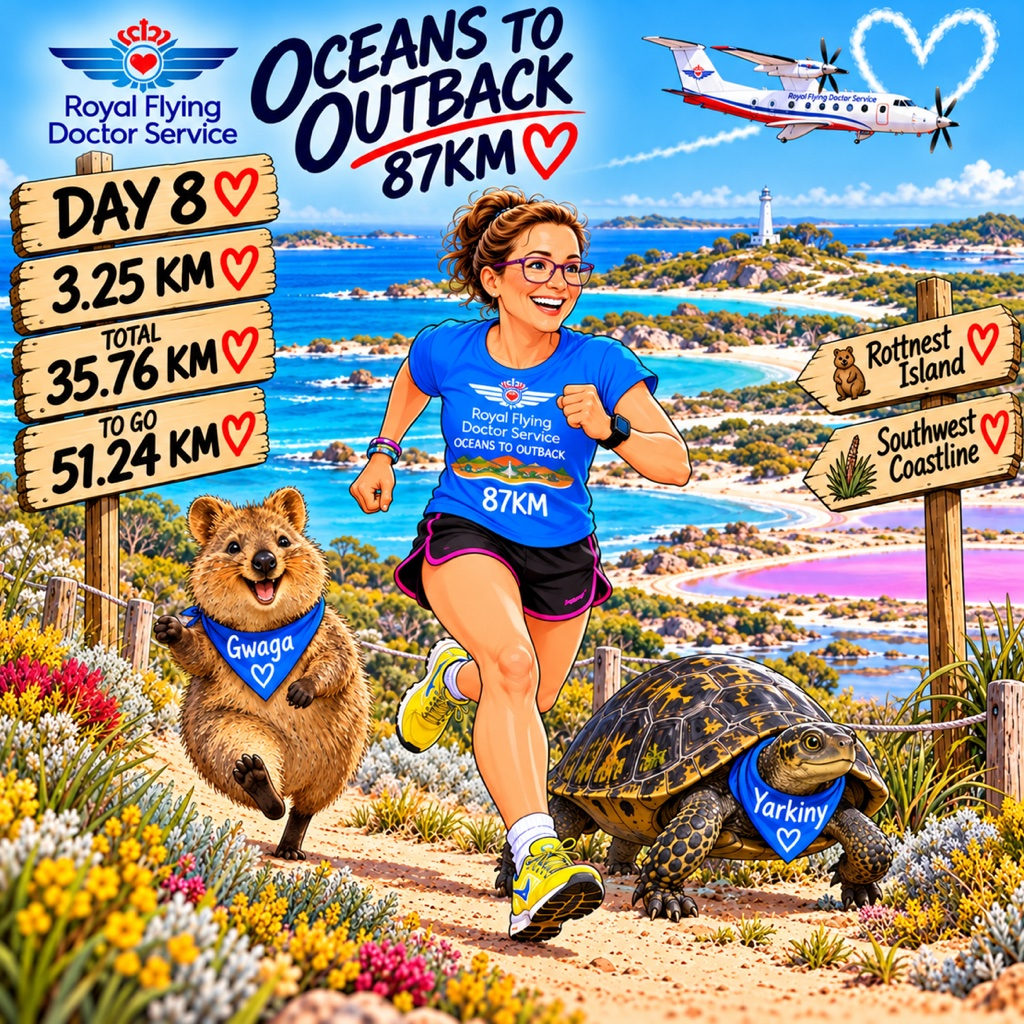
Running for the isolated survivors. I'm officially pushing deep into the breathtaking Southwest Australian coastal corner today, and the scenery isn't the only thing that's wild. The sheer isolation of these coastal stretches makes you realize how vital a lifeline like the Royal Flying Doctor Service truly is. When you are hours from a hospital, the red and white planes are everything. My wild companions today are two absolute icons of Western Australian resilience that represent the spirit of the communities I'm running for: Gwaga (The Quokka) ( one of my all time favourite wildlings) – The Spirit of Connection While everyone knows them as the world’s happiest animal, the Quokka’s reality is one of profound isolation. Cut off from the mainland, Gwaga (their traditional Whadjuk Noongar name) survives in pockets like Rottnest Island. They represent the resource of community morale. Even when completely isolated by geographic distances, human connection and joy can thrive—as long as a reliable lifeline like the RFDS is keeping that community safe. Yarkiny (The Western Swamp Tortoise) – The Sleeping Survivor Australia’s rarest reptile, Yarkiny, is a master of enduring extreme isolation. To survive the blistering dry seasons, they burrow deep into the earth and go dormant, waiting for the rains. Yarkiny represents the resource of ultimate endurance and adaptability. They symbolize our incredible remote outback and coastal dwellers who find ingenious ways to adapt and persevere through the harshest seasons of life. Every dollar I raise on this coastal foot-slog keeps the doctor flying to the most isolated corners of

Day 7: Cocus(Keeling) Islands, Ningaloo and Barrow Island
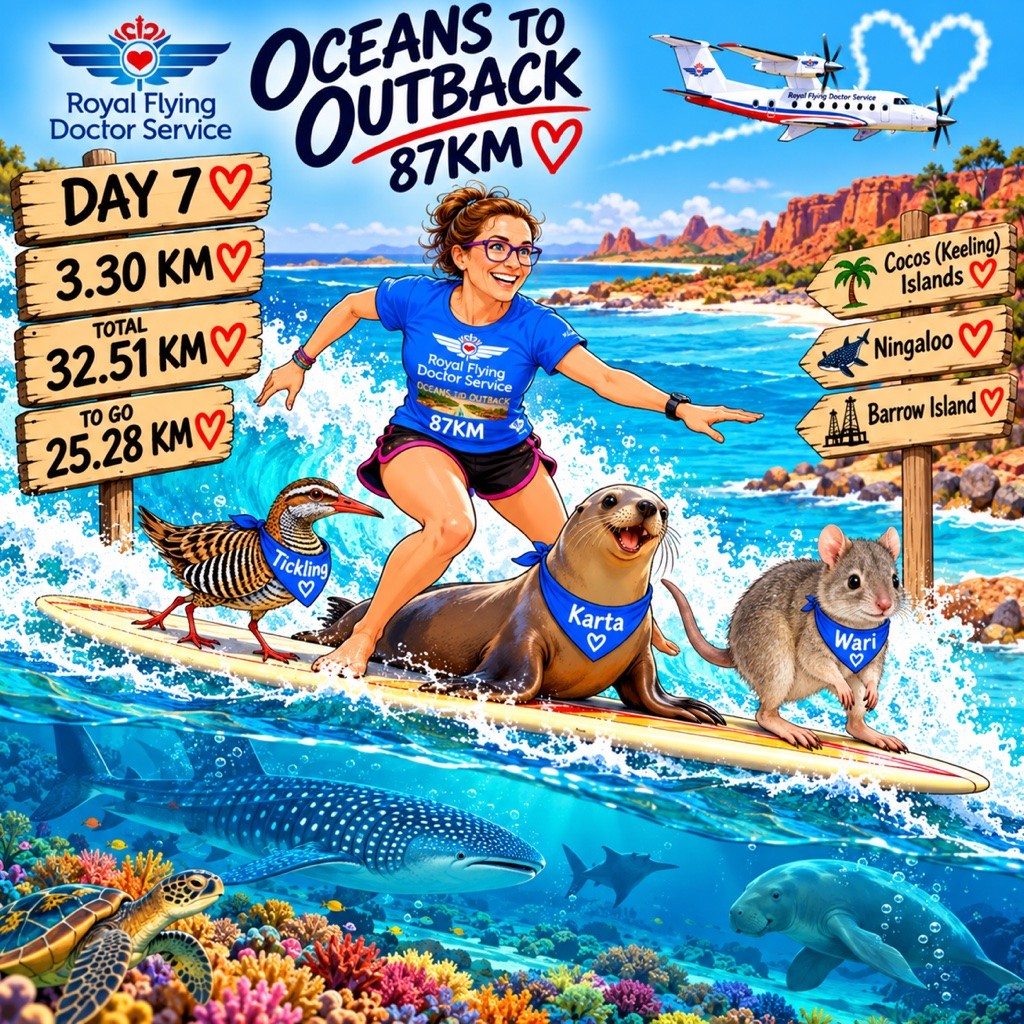
Talk about a change of scenery! Today, my virtual circumnavigation takes a massive leap out into the Indian Ocean before tracing the spectacular, sun-drenched coastline of Western Australia. The true focus of today's leg is highlighting how the Royal Flying Doctor Service provides a vital medical safety net for these incredibly isolated outposts—from remote island communities to the workers on offshore oil rigs and mining operations floating hundreds of kilometres out to sea. We are ticking off kilometres across some of the most isolated and ecologically pristine islands, reefs, and beaches on the planet! Pushing through the coastal sea breezes is keeping me on my toes, but knowing every stride helps the Flying Doctors keep remote Aussies safe is the ultimate fuel. To honor these incredible, isolated sanctuary zones, today's run is dedicated to three absolute superstars of the west—each finding a vital final refuge on these predator-free shores and rugged coastlines: • 🐦 Tickling (The Cocos Buff-banded Rail): Named after its native home, the Cocos (Keeling) Islands, where it's fondly known by locals as ayam hutan ("chicken of the forest"). Tickling is an endangered, ground-dwelling bird found nowhere else on Earth except for these remote atolls. They are bold, chicken-sized characters that love to scurry through the leaf litter and dart between picnic tables! • 🦘 Wari (The Boodie / Burrowing Bettong): Representing our leg past Barrow Island, this tiny, ultra-rare marsupial is completely extinct on the Australian mainland due to foxes and feral cats. Barrow Island is one of their last safe havens! Wari is a member of the only kangaroo family branch that lives entirely in underground burrows—making them the ultimate outback excavators! • 🦭 Karta (The Australian Sea Lion): Spotlighting our journey down the WA coast toward the chilly southern waters, Karta represents one of the rarest sea lions in the world. Endemic entirely to Australia, these playful, puppy-faced "pups of the sea" love to lounge on pristine white sandy beaches and surf the crystal-clear coastal swells. From isolated coral atolls to remote island nature reserves and rugged coastal towns, the communities living on the edge of the west rely completely on the RFDS for emergency flights, regular health checkups, and telehealth. We are inching closer to that $1,000 goal! 🤞 Every single dollar keeps the lifeline moving. Thank you all so much for following my journey and supporting the bush! 🏃‍♀️💨

Day 6 🐊 Day 6: The Gulf , Kakadu Wetlands and Darwin! 🪵
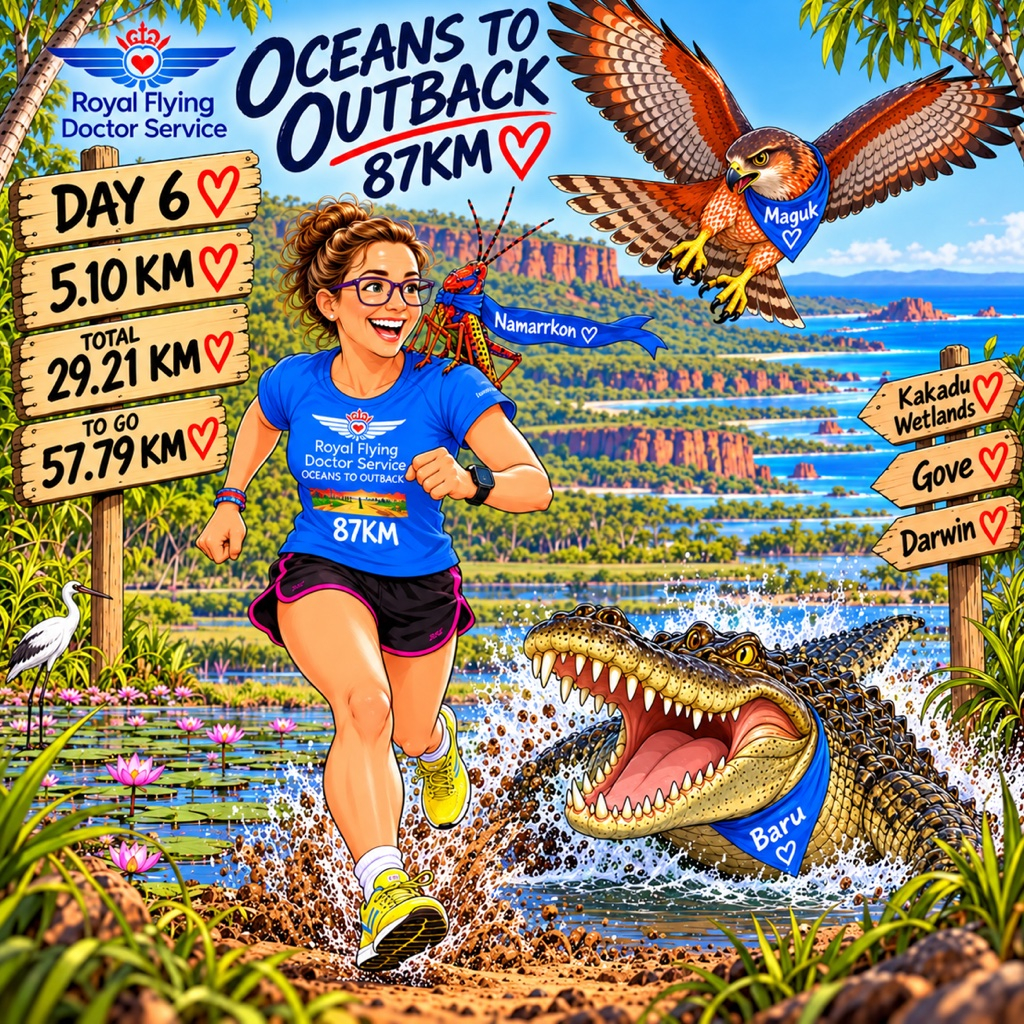
I have left the Torres Strait behind and are charging straight across the mighty Gulf of Carpentaria, tracking past Nhulunbuy, sweeping through the spectacular wetlands of Kakadu, and heading all the way up to Darwin! Things definitely got snappy today, but the thought of keeping the Flying Doctors in the air keeps my legs moving. To honor this ancient, wild, and incredibly diverse corner of the Top End, today's km are dedicated to three very special local legends—including a couple of Australia's rarest: • 🦗 Namarrkon (The Leichhardt's Grasshopper): Known to the local Bininj people as the "lightning man" because they emerge with the spectacular stormy build-up to the wet season. Dressed in brilliant, flashing orange and electric blue, they feed exclusively on a rare desert shrub. Seeing one in the sandstone country is pure magic! • 🦅 Maguk (The Red Goshawk): Named after the beautiful Kakadu plunge pool, this stunning raptor is officially Australia’s rarest bird of prey. They are incredibly stealthy, powerful hunters that rely on the tall, pristine woodlands of the Top End to raise their young—a true ghost of the canopy. and last one we all know😉 • 🐊 Baru (The Saltwater Crocodile): You didn't think I'd run through the wetlands without mentioning the ultimate boss of the north, did you? Named after the ancestral crocodile spirit, Baru represents the raw, prehistoric power of the ancient floodplains. We are definitely giving the water's edge a very wide berth today! 🏃‍♂️💨 Every single kilometre I log across these vast wetlands helps the Royal Flying Doctor Service bring vital GP clinics, dental checkups, mental health support, and critical emergency flights to the remote communities and outback stations that share the land with these incredible creatures. We are edging closer and closer to that $1,000 goal! 🤞 Every dollar keeps the lifeline moving. Thank you so much for backing me and my wildlings🙂

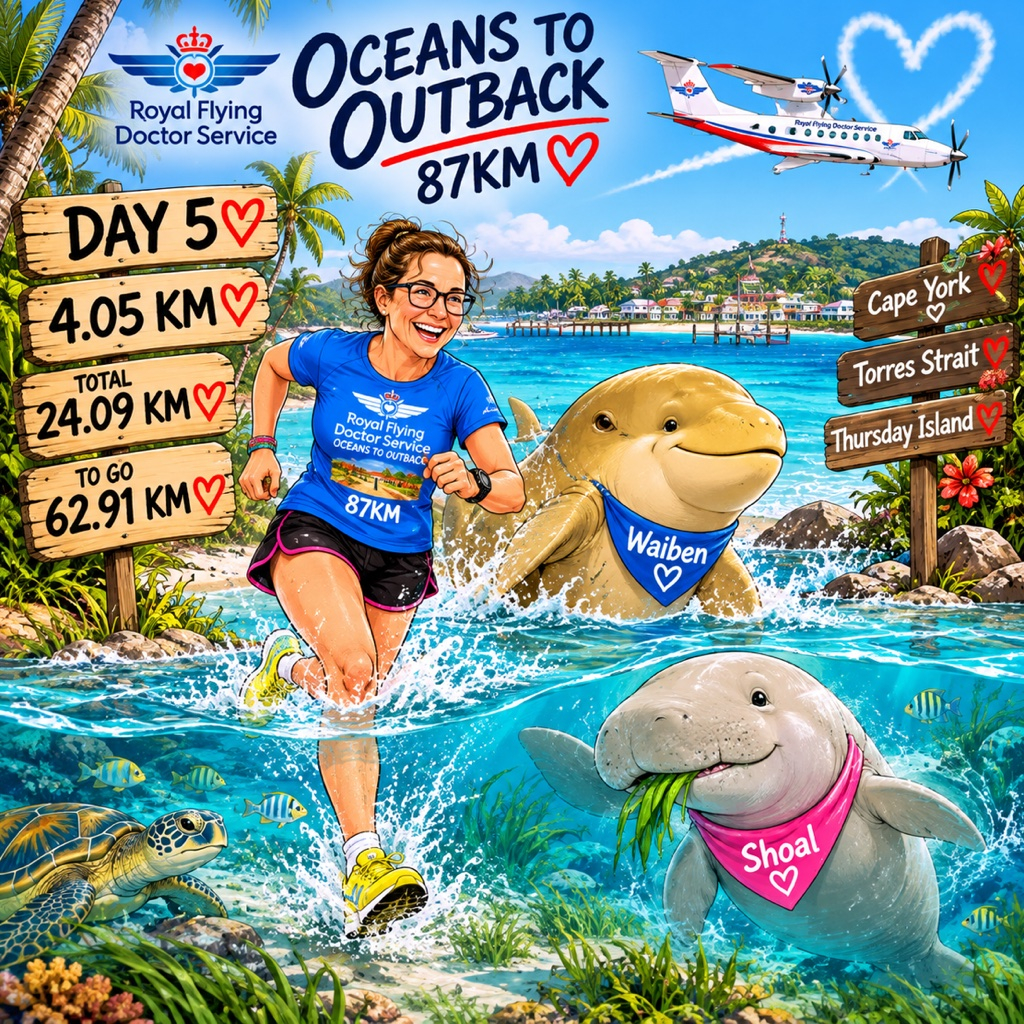
Day 5: Thursday Island

Today my virtual circumnavigation takes me up to Thursday Island (Torres Strait), a spectacular part of the world where I was lucky enough to live and work many moons ago. To honor this stunning region, today's miles are dedicated to two of Australia's rarest marine species that share these shallow waters: • 🐬 Waiben (The Australian Snubfin Dolphin): Named after the traditional Kaurareg name for Thursday Island. Snubfins are incredibly rare, shy, and have a unique habit of spitting plumes of water to herd fish. There are zero in captivity anywhere on Earth! • 🌊 Shoal (A gorgeous Dugong): Named after the shallow coastal sandbanks and lush seagrass meadows of the Torres Strait, which holds the most globally significant population of these gentle "sea cows." Every kilometre I log helps the Royal Flying Doctor Service continue providing life-saving healthcare to the remote coastal communities and outback stations that these animals call home. Thank you so much to everyone who has donated so far! Next up... we head across the Gulf toward Arnhem Land and Darwin. Get ready, because things are about to get snappy🤪

🌿 Day 4: Mission Beach to the Daintree Rainforest
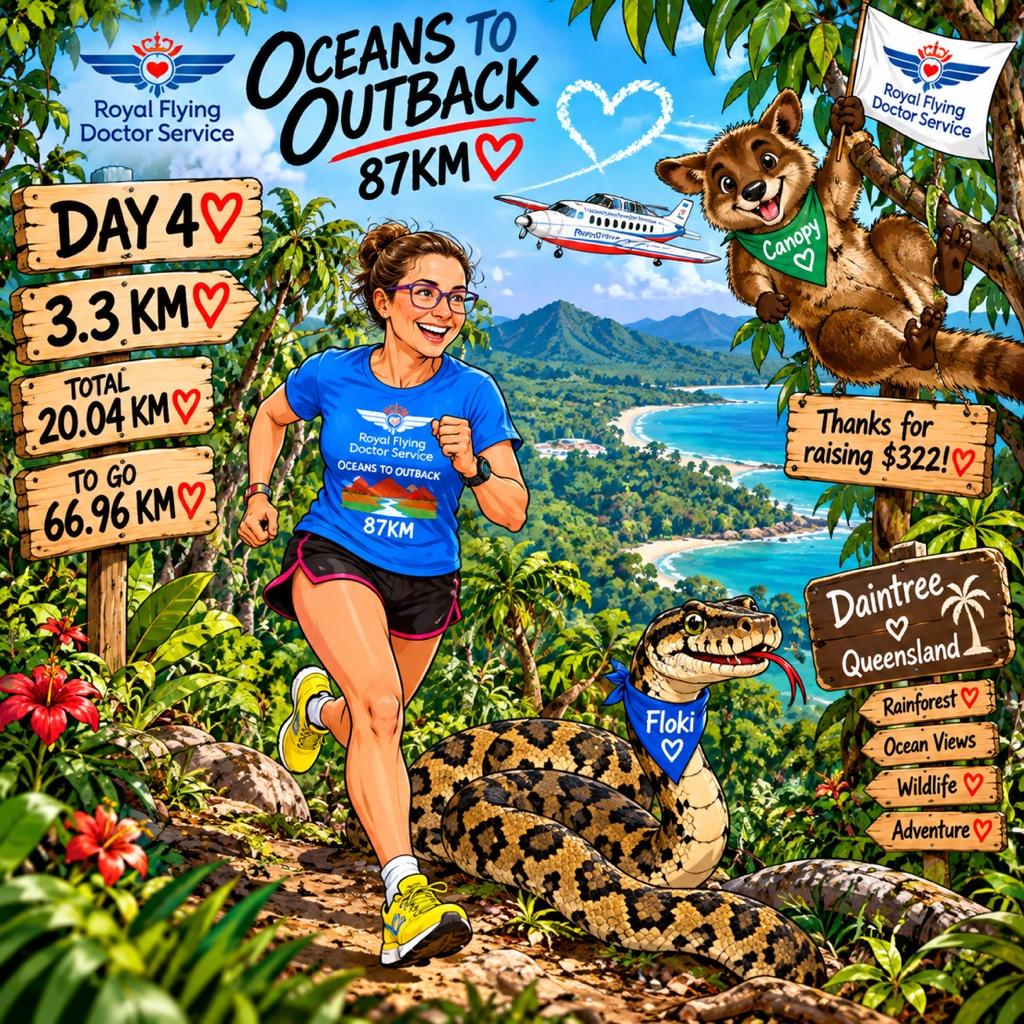
Featured Wildlife: Tree Kangaroo & Coastal Carpet Python Today’s leg steps into the ancient, deep-green canopy of the Daintree. The rainforest is close to my heart. Today’s tracking companions are two incredible species that rely on this dense, vertical world: • 🍃 Canopy (The Bennett's Tree Kangaroo): One of Australia’s rarest and most elusive marsupials. Moving away from the typical hopping macropods, this beautifully adapted climber navigates the highest branches with massive, gripping paws. • 🐍 Floki : The Coastal Carpet Python): These master visual adaptors are patient ambush predators, perfectly blending into the mossy bark and vines. We are pushing hard through the humidity today to support the RFDS! Next stop... rounding the tip to Thursday Island! 🏃‍♂️💨

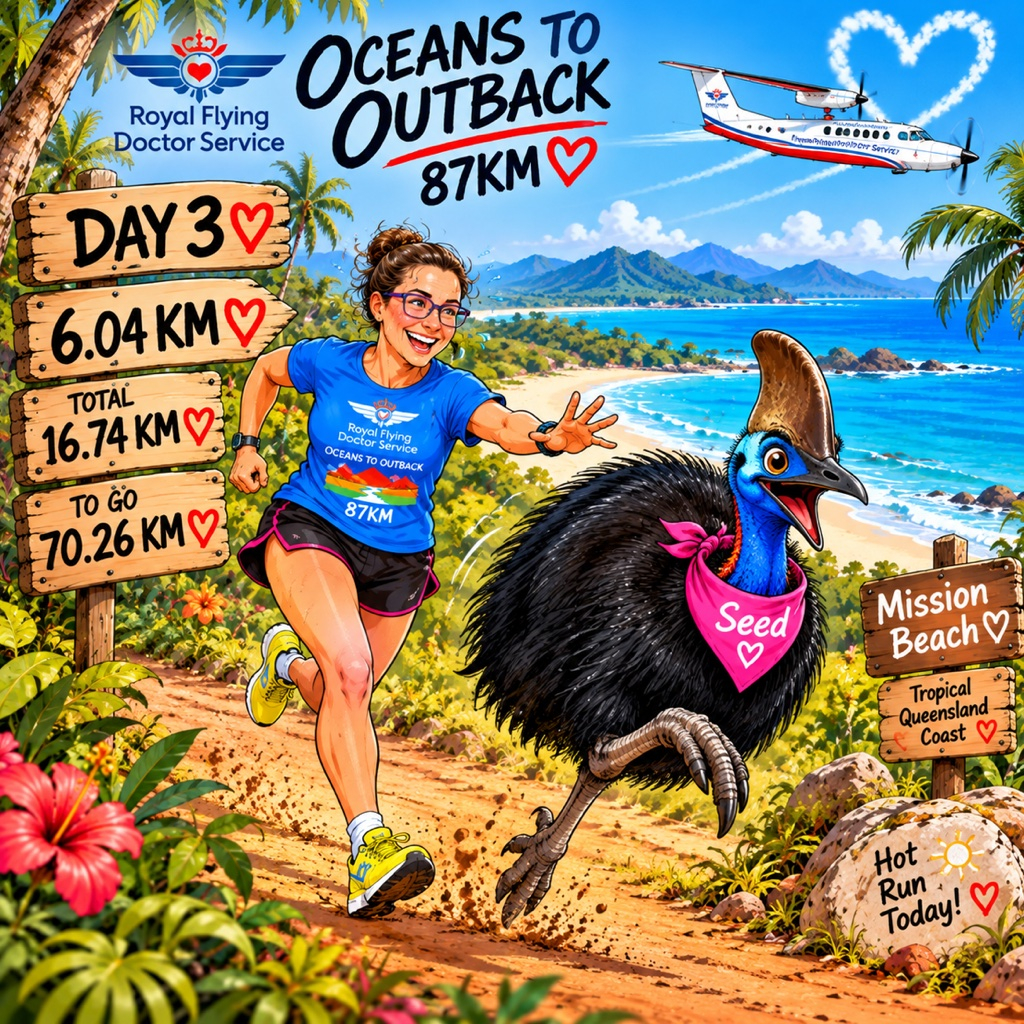
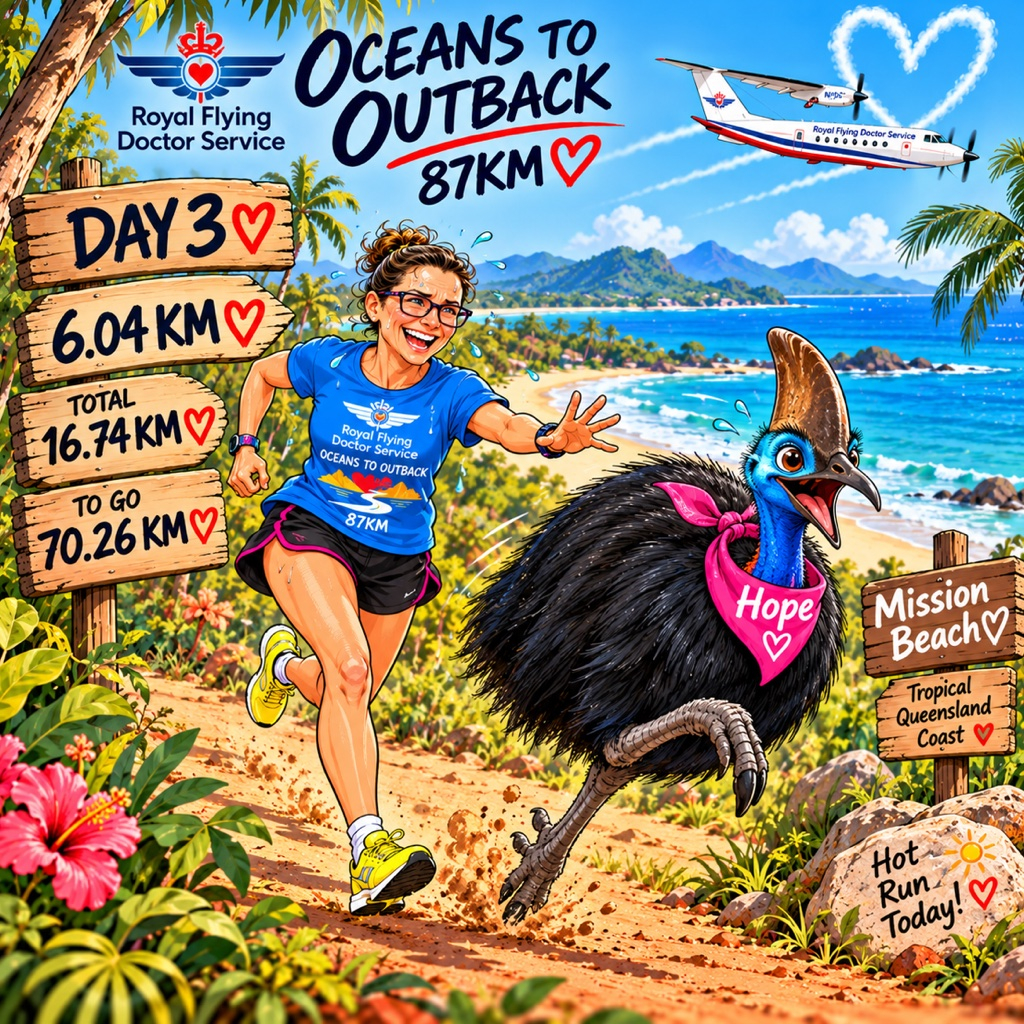
Day 3: Mission Beach

Featured Wildlife: Southern Cassowary Today the track shadows the spectacular Cassowary Coast. My virtual running continues up the coast trying to keep up with my favourite cassowary "Seed". Seed is a magnificent, ancient Southern Cassowary. As a key keystone species, this giant, flightless bird is the literal gardener of the rainforest, dispersing large seeds that no other animal can eat. Wild, territorial, and completely irreplaceable—just like the remote country the RFDS flies over every single day. https://www.oceanstooutback.org.au/fundraisers/maggiehughes

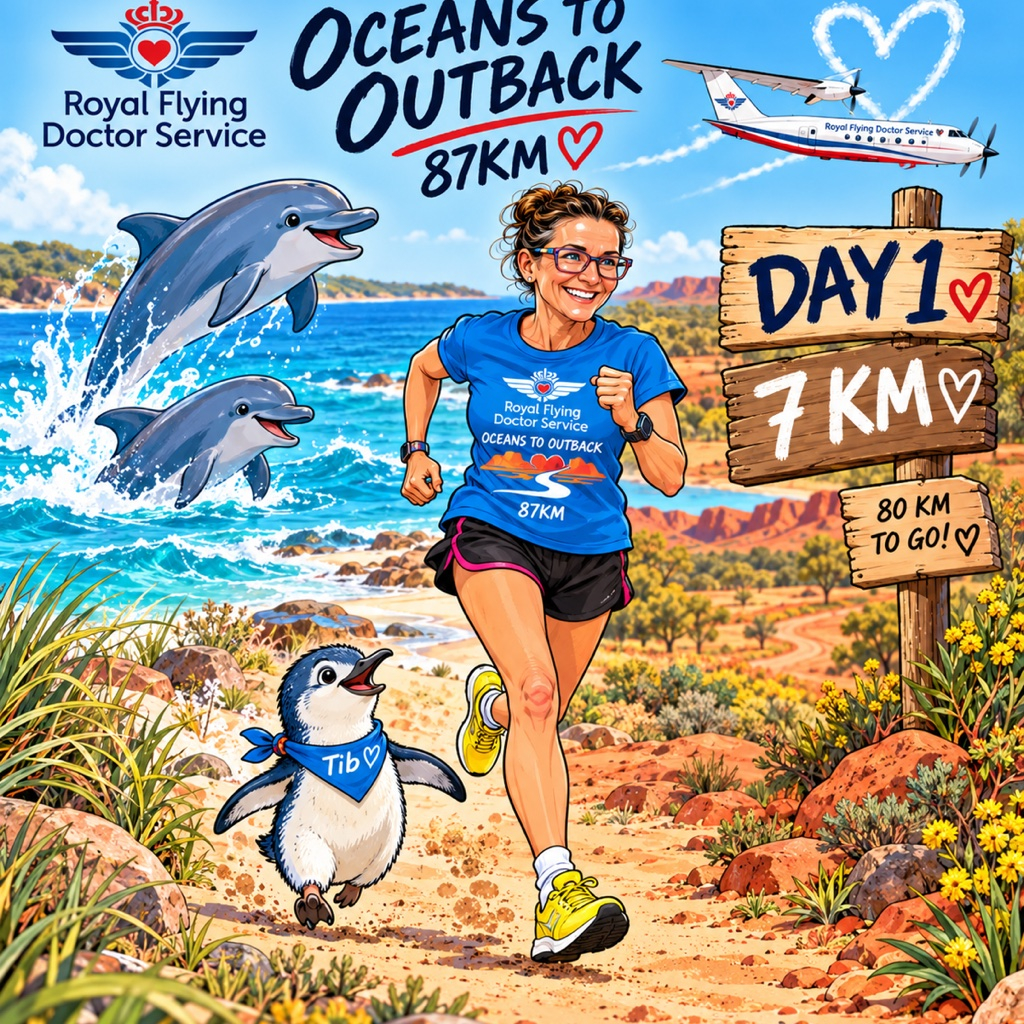
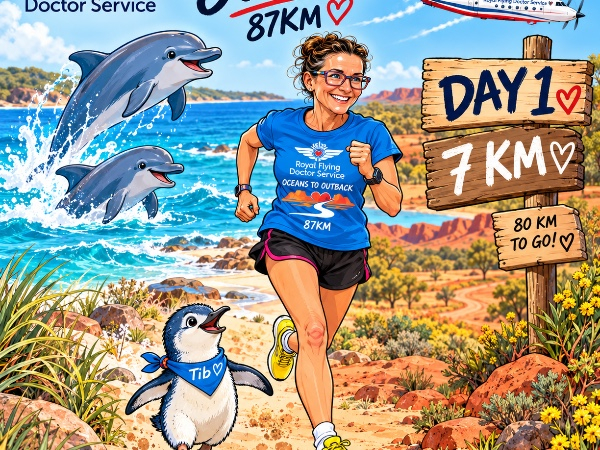
✈️ Day 1 Oceans to Outback 87km

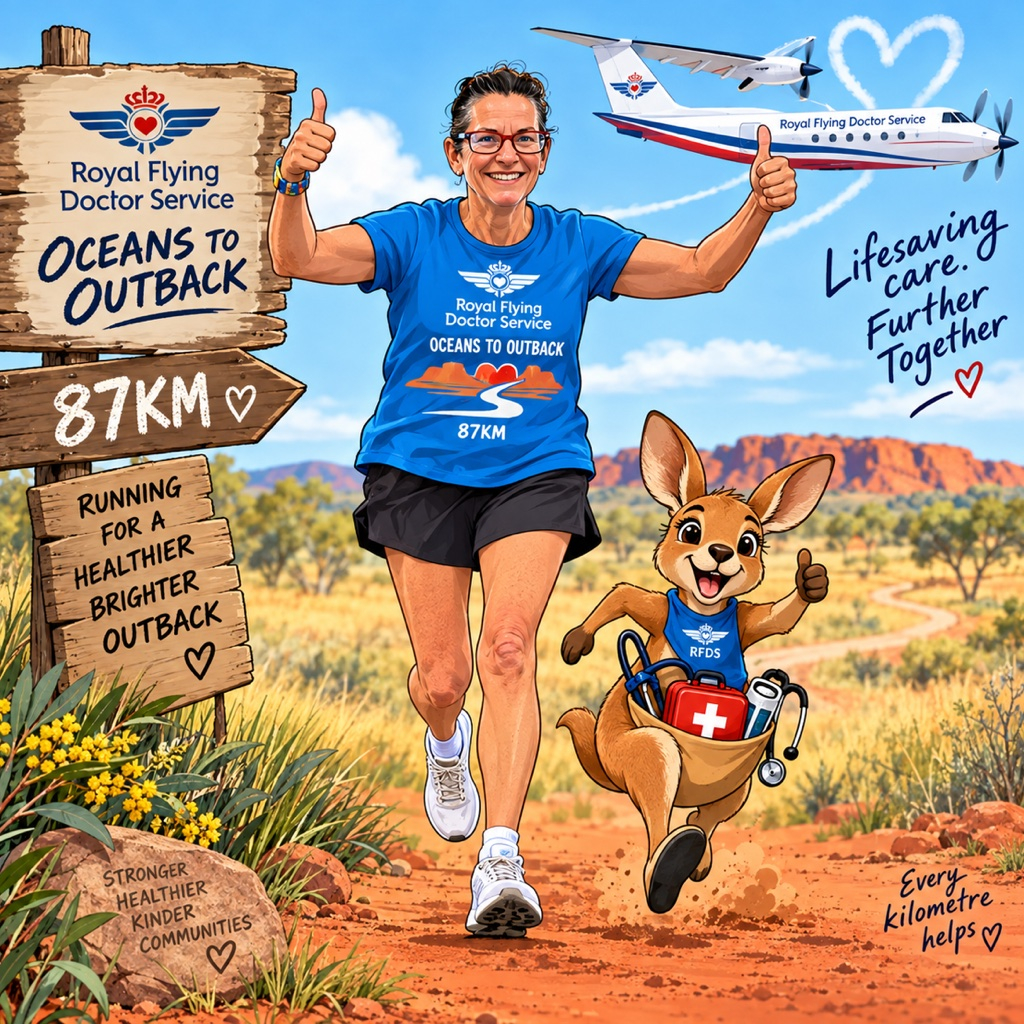
✈️ Day 1: Oceans to Outback: 87 km Wildlife, Wallets, and the Flying Doctors! Hi, I’m Maggie! I’m a remote Queensland wildlife carer who has been around the block a few times (let's just say I’ve got plenty of vintage mileage under my belt!). I’m also a Type 1 diabetic living in the bush. I am embarking on a virtual 87km run ( and running the real 87km) zig-zagging all the way around Australia to Alice Springs! To captivate your hearts—and hopefully loosen your wallets! 🤞—I am dedicating each leg of my journey to my absolute favorite wildlings. Over my many years as a carer, I've raised some of our country's most spectacular and rarest species. Using my wild tracking companions is a fun way to share my journey with you, but it highlights a very serious reality. The Royal Flying Doctor Service (RFDS) is so much more than an emergency plane. In the remote areas where these animals live, the RFDS acts as the entire healthcare backbone—providing mental health support, regular fly-in GP clinics, dental care, telehealth, and critical patient transfers. As someone managing T1 diabetes in remote Australia, I know firsthand that this service is our absolute lifeline. Every dollar you donate directly keeps the Flying Doctors in the air and supporting the bush. Thank you for backing me, my wildlings, and this incredibly worthwhile cause! 🏃‍♂️💨 https://www.oceanstooutback.org.au/fundraisers/maggiehughes

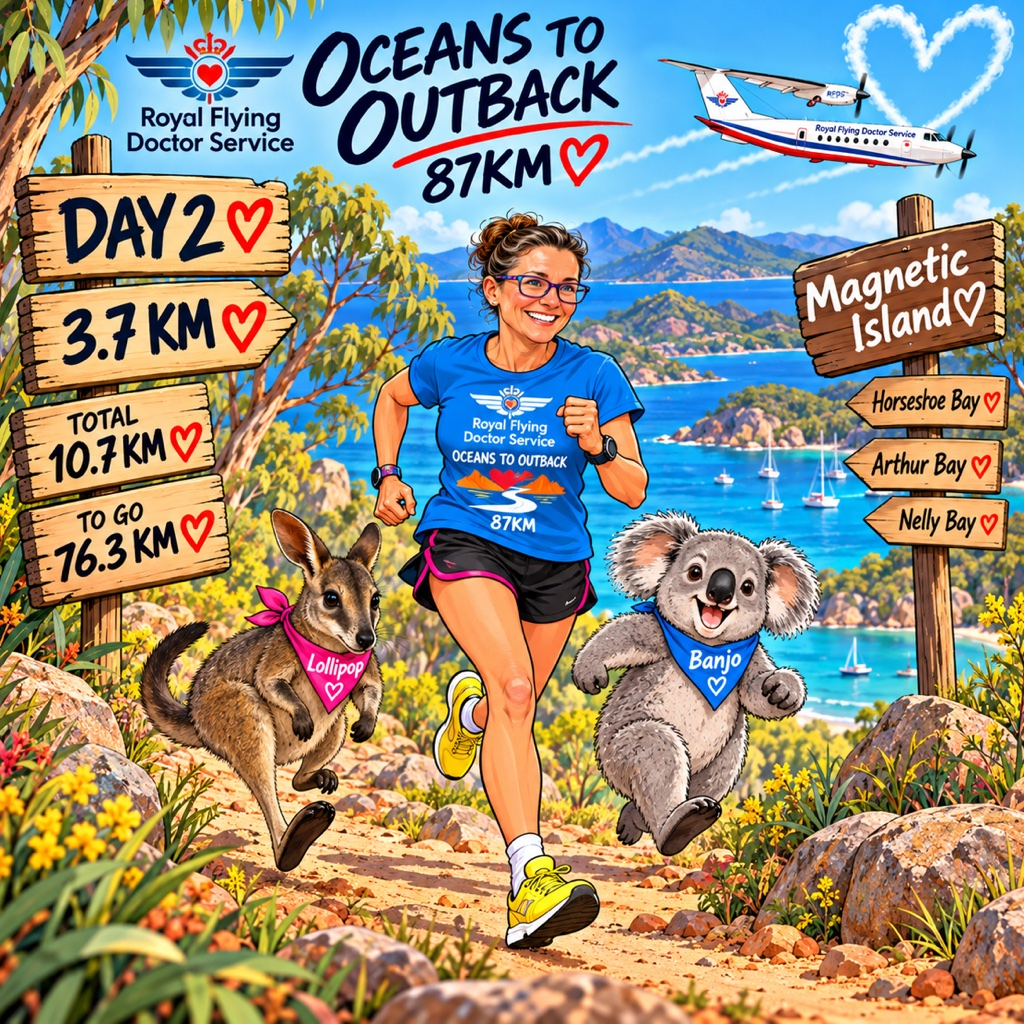
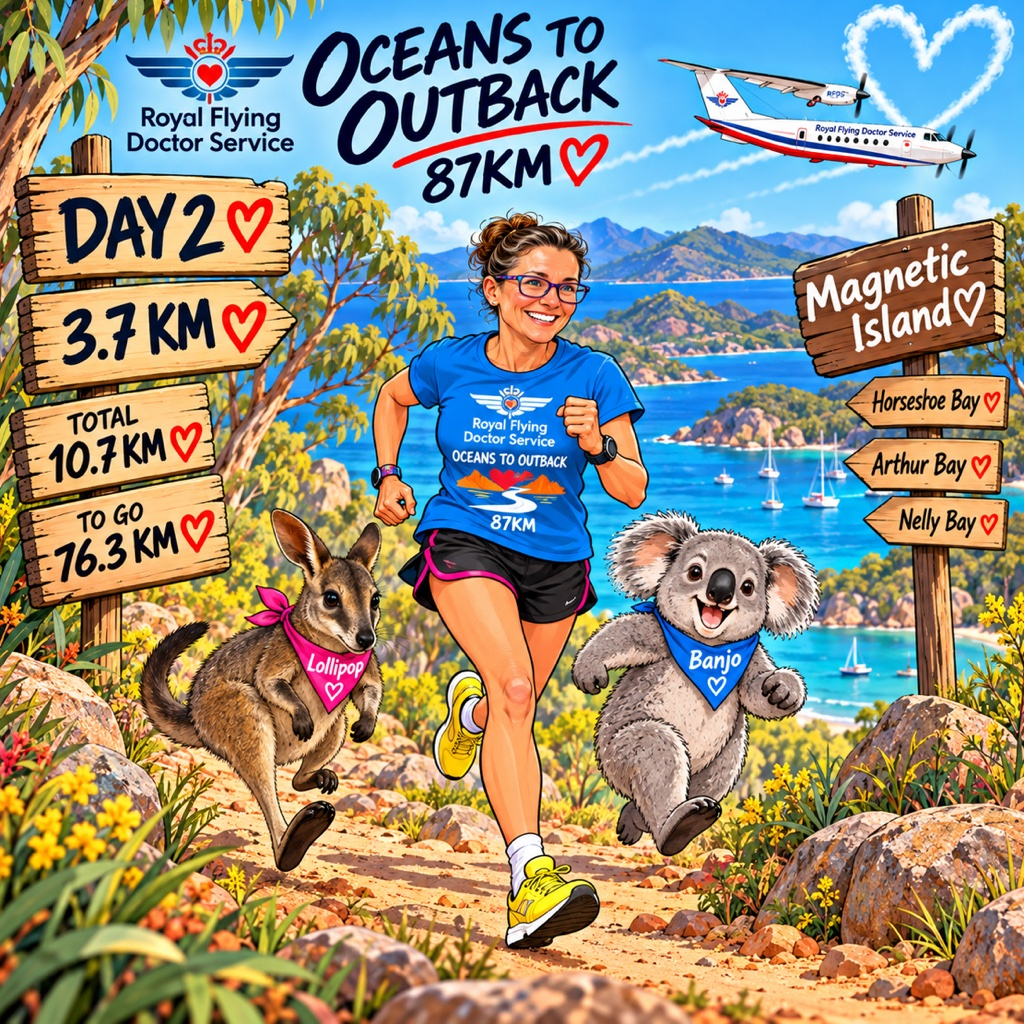
🏝️ Day 2: Magnetic Island

Featured Wildlife: Koala (Banjo) & Allied Rock Wallaby (Lollipop) Stepping onto the rugged, granite shores of Maggie Island! Today’s miles are dedicated to two unforgettable island locals I had the privilege of caring for. First up is Banjo the koala, snoozing high in the coastal gums. Sharing the spotlight is Lollipop the Allied Rock Wallaby—and let me tell you, she was just the sweetest little thing you could ever imagine! Raising wild characters like these two is exactly why I'm running 87km to support the RFDS and the remote communities that protect our wildlife.

Day 3

Did a 1 km warm up run and 5km Parkrun in Cloncurry. It was hot🥵 but virtually we are just passing through Mission Beach trying to keep up with my favourite Cassowary😉

Day 2

Very long day driving ... so just a quick run to keep up my km tally

I'm fundraising for the Royal Flying Doctor Service

This October, I’m running 87km for a cause that is very close to my heart — the Royal Flying Doctor Service. ❤️

The RFDS has quite literally saved my life, as well as the lives of friends and colleagues. When you live, work or travel in rural and remote Australia, you realise just how vital it is to have lifesaving medical care when help can be hundreds of kilometres away.

Maybe the RFDS has helped you, your family, a friend or someone you know too.

So, kilometre by kilometre, I’ll be taking on 87km this October to help keep the Flying Doctor flying. ✈️🏃‍♀️

If you can spare even a few dollars, I would be incredibly grateful. Every donation, no matter the size, helps the RFDS continue being there when someone is having the very worst day of their life.

87km. One very grateful runner. And hopefully a whole lot of help for the people who need the RFDS next. ❤️


So far this year
I’ve helped provide...

Laryngoscopes image

21

Laryngoscopes – used to assist in intubating and ventilating a patient.
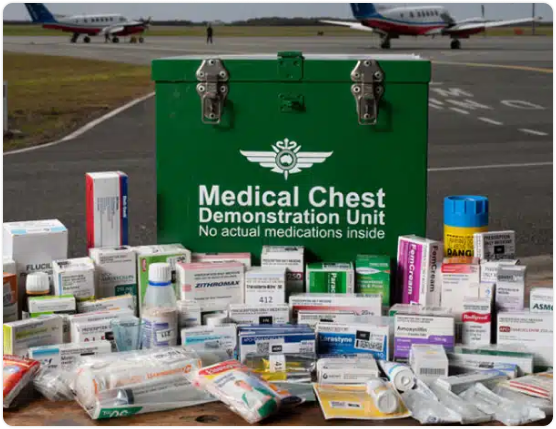
Life-saving medical chests image

13

Life-saving medical chests for a remote, rural or regional community.

Defibrillator Pads

12

Defibrillator Pads – used with a machine to monitor a patient’s cardiac health.

 TOP DONATION 

Avatar
$117.43
Kelsian Matched Giving
Shoutout to Kelsian
– my biggest supporter so far with a $117.43
donation to help the Royal Flying Doctor Service
bring life-saving support to Australians in need.

Thank you to my supporters

100% Total Legends

Icon

Cloncurry Smiths Transport

$117.43

Icon

Kelsian Matched Giving

$117.43

Icon

Jan Laird

$108.89

Icon

Jan

$108.89

So proud of you Maggie!

Icon

Kelsian Matched Giving

$100

Top Fans

Icon

Sue

$72.06

Good on ya Maggie! Love your community commitment - as always! ...wish my knees could still attempt this!

Icon

Kerry Davison

$72.06

A great cause. Well done!

Proud Supporters

Icon

Kathryn Purse

$36.62

Icon

Pratibhaben Payel

$36.62

Icon

Facebook Donation

$20.53

Icon

Anonymous

$20

Icon

Maggie Hughes

$11.92

Icon

Kelsian Matched Giving

$11.92

Icon

Gloria

$11.92

Icon

Frank Kummer

$11.92

Go Maggie, great to have you supporting such a great cause.

My Updates

Day 1

Thursday 1st Oct
Here I go😁